Growing conditions in Red Lodge, Montana
Red Lodge, Montana
Yellowstone & Beartooth region · South-Central Montana
- USDA hardiness zone
- 5a
- Frost-free days
- ~116
- Elevation
- 5,562 ft
- Annual precipitation
- 22.7"
- Region zone band
- 4a – 5b
- What defines it
- Highest town in the state
Zone from the 2023 USDA Plant Hardiness Zone Map. Frost-free days are an approximate single-station estimate at roughly the 50% probability level and vary within a town. Precipitation is a NOAA 1991–2020 normal.
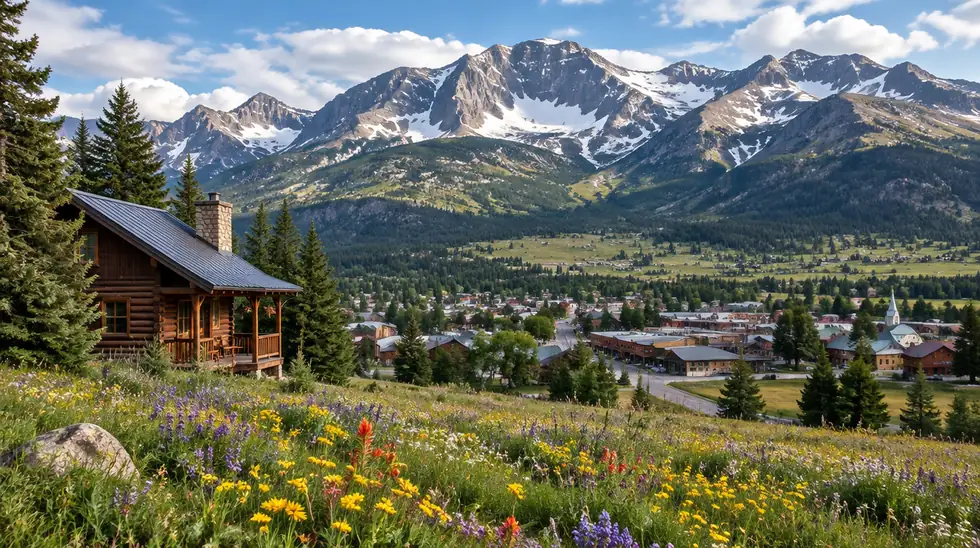
Red Lodge is the highest town in Montana, 5,562 feet of thin air stacked under the Beartooth wall, and it is the wettest city in the state. 22.7 inches a year comes down on it, close to half again what Billings receives down the valley.
It sits in zone 5a.
That is warmer on paper than Butte, which sits 23 feet below it and still carries a colder 4a–5a rating. So the numbers look like a contradiction.
They are not. The zone rating tells you whether a plant survives the winter. The frost-free count tells you whether it can finish its summer. Red Lodge's problem is never the winter. It is the calendar.
The numbers that decide everything in Red Lodge
| Fact | Red Lodge |
|---|---|
| Elevation | 5,562 ft — the highest town in Montana |
| USDA hardiness zone (2023 map) | 5a |
| Frost-free days | ~116 (approximate — a single-station estimate, and it varies across town) |
| Annual precipitation (NOAA 1991–2020 normals) | 22.7 in — the wettest city in our table |
| Region | South-Central / Yellowstone & Beartooth |
| Soil reaction | Alkaline, though moister and cooler than the plains towns |
| Defining hazards | Short season, heavy snowpack, spring frost, wildfire |
Two caveats before you plant anything. Verify your address at the official USDA tool, planthardiness.ars.usda.gov, because zones are fine-grained and Red Lodge's cold-air drainage varies sharply between the valley floor and the slopes just above it. And treat 116 frost-free days as a single-station estimate published at roughly the 50% probability level, which means half of all years will frost outside that window.
This is one of the shortest growing seasons in the state. It runs about the same as Livingston. Read how the 2023 USDA map was drawn for why the map changed.
What that means for your yard
Zone 5a is real, and it is not the limit. Red Lodge genuinely winters better than the plains towns, and a zone 5 rating means you can carry plants through cold that would die in Havre or Miles City. But zone alone will mislead you here. The binding constraint in Red Lodge is the 116-day growing window. A plant can be perfectly winter-hardy and still fail, because it cannot bloom, ripen or harden off before the first fall frost.
Elevation and cold-air drainage decide your microclimate. Cold air drains downhill and pools, so valley bottoms are colder at night than the slopes just above them, the same inversion effect that makes Missoula a textbook case. In a valley town like Red Lodge the instruction is simple: plant frost-sensitive stock partway up a slope, not in the bottom. The mid-slope band above the inversion layer is a thermal belt that stays warmer through the winter, and that is where the tender things belong. Our guide to Montana microclimates explains the mechanism, and the test costs nothing. Walk your yard on a cold clear morning and see where the frost sits: the low corner by the driveway, the dip along the back fence, the strip of ground still white after the rest of the lawn has burned off.
22.7 inches is a lot of water, and most of it arrives as snow. It is the reason Red Lodge grows the wildflower meadows the Beartooths are known for. It also means the soil is cold and slow to warm in spring, that snow lingers on north and east exposures, and that a plant put in too early sits in cold, wet ground and does nothing. Packed snow protects roots from dry cold. Where wind and sun strip it away, they do not.
Alkaline soil still applies, even here. Most Montana soils are high in calcium, and that calcium ties up phosphorus. Past about pH 8.3 the soil begins locking away phosphorus, potassium, iron, zinc and manganese, per MSU Extension Soil Fertility. You will not lower that pH in a home landscape. MSU Extension cites roughly 10,000 pounds of elemental sulfur per acre to move pH from 8.0 down to just 7.5. Choose pH-adapted species instead. When a plant fails on lime, the classic symptom is iron chlorosis, yellow leaves with green veins, and why a Montana lawn turns yellow covers chlorosis and the other likely causes.
To be exact: the right terms are calcareous soils, free lime, or high pH. A contractor who names your soil with a Southwest term is reading from another state's script.
And then there is fire. Montana ranks second nationally for the share of homes at catastrophic wildfire risk, and Red Lodge sits against a forested mountain wall, so the defensible-space rules that read as optional in a prairie town read as mandatory here, with juniper kept out of the defensible space entirely and gravel or pavers standing in for bark mulch. Zone 1, the first 0–5 ft, is noncombustible, with no bark mulch. Zone 2, 5–30 ft, is limbed up 6–8 feet with ladder fuels removed. Zone 3, 30–100+ ft, is thinned for canopy breaks. The full protocol is in fire-resistant plants and defensible space. Note also that MCA 33-24-110 lets insurers discount for defensible-space landscaping.
What grows here
Red Lodge's palette is the mountain-meadow list, the plants you can watch flowering on the slopes above town in July, brought down into the yard. The zone ranges in the table below are the plants' own sourced ranges. One rule matters more here than anywhere: everything needs water while it establishes, and in a 116-day season you plant in spring and give the whole first summer to root growth, not to looks.
| Plant | Type | Zone range | Why it works in Red Lodge |
|---|---|---|---|
| Quaking aspen | Tree | 1–6 | Aspen decline is real — but the killer is low, warm, dry valley ground. At 5,562 ft on cool, moist ground, Red Lodge is aspen's best case in Montana. |
| Greenspire linden | Tree | 4–8 | Tolerates alkaline soil and drought — one of the best shade trees for Montana's high-pH ground. Watch aphids and linden borer. |
| Bur oak | Tree | 3–8 | Montana's only native oak, drought- and alkaline-tolerant, with thick corky fire-resistant bark. |
| Limber pine | Evergreen | 4–7 | One of the few conifers suited to limy soils, and drought-tough. Watch for white pine blister rust. |
| Engelmann spruce | Evergreen | 2–5 | A native high-country spruce that wants moist, slightly acid soil — and MSU names it thin-barked and fire-killed, so keep it well away from the house. |
| Ninebark | Shrub | 3–7 | Tolerates alkaline soil, clay, drought and short seasons. Exfoliating bark gives winter interest. |
| Preston lilac | Shrub | 3–7 | Blooms about a week later than common lilac — exactly what you want where May frosts freeze the early bloom. |
| Potentilla (shrubby cinquefoil) | Shrub | 3–7 | Among the most reliable long-blooming shrubs for short-season, alkaline, windswept sites. |
| Pasqueflower | Perennial | 4–7 | The first real bloom of the Montana spring, often in April. Needs sharp drainage — give it a slope. |
| Colorado blue columbine | Perennial | 4–8 | Short-lived, so let it self-sow. Wants shade and consistent moisture, which Red Lodge has. |
| Silvery lupine | Perennial | 4–9 | Fixes nitrogen and excels on disturbed, gravelly ground. The foliage is toxic to livestock. |
| Tufted hairgrass 'Goldtau' | Grass | 4–9 | Native to Montana wet meadows and one of the few grasses here that reliably flowers. Wants afternoon shade or steady moisture. |
Read that as a meadow rather than a border. Aspen, limber pine, linden and bur oak give you structure. Ninebark, potentilla and Preston lilac fill the middle. Pasqueflower, columbine and lupine give you the wildflower sequence the Beartooths are known for, opening with April's pasqueflower, and tufted hairgrass carries the ground under all of it.
The wider roster is in native plants of Montana, and if you want flowering shrubs specifically, the best shrubs for Montana groups them by use.
Deer and elk are a real presence on the edges of town. MSU Extension's deer guidance notes the browse is torn and jagged, because deer lack upper incisors, and it reaches about 6 feet. That makes a 6-foot fence a light-pressure floor rather than a solution. 7 to 8 feet, or a double fence, is the real answer, and woven wire at 8–10 feet under heavy pressure. No plant is deer-proof: MSU states plainly that a hungry deer will eat almost anything. Our deer-resistant plant list ranks the tougher options.
What dies here
Anything that needs a long, warm season to ripen. This is the Red Lodge disqualifier, and it is a bigger list than people expect. Big bluestem wants a long warm season to flower well; little bluestem needs a warm site to colour before frost; switchgrass 'Northwind' needs real summer heat to flower; Sioux Blue indiangrass is explicitly marginal in Montana's short cool season. These are prairie plants that succeed in Glendive with its 160 days and fail at 5,562 feet with 116. In the vegetable garden the same rule bites: eggplant, melons and pumpkin all need 80 to 120 days to maturity with no frost tolerance, and against a 116-day season that means a high tunnel or nothing.
Tender stone fruit. The zone permits it. The calendar does not. Contender peach is the most realistic Zone 4 peach and still short-lived, and it must have the warmest, most protected site you own. Eubank sweet cherry is an early bloomer, so it is exposed to exactly the spring frosts this valley delivers. Meteor pie cherry and North Star cherry are the honest choices here, because sour cherries suit a short season far better than sweet ones. If you want apples, McIntosh is well suited to cool summers, and Honeycrisp is realistic but expect bitter pit: it is not self-fruitful, so it needs a second cultivar plus a crabapple polliniser.
Anything acid-loving. Blueberries and huckleberries want a pH near 5.5. Red Lodge's ground is alkaline, and any page promising you a huckleberry patch in a Montana yard is selling you something. Kinnikinnick fails here for two reasons at once: it chloroses badly on alkaline soil, and winter desiccation kills it when it loses its snow cover. See native plants of Montana for what to plant instead.
Fire-risky conifers near the house. Rocky Mountain juniper is highly flammable, and Engelmann spruce is thin-barked and fire-killed, and MSU names it outright as poor for defensible space. Both are fine plants. Both belong well away from the structure.
Late-blooming perennials in the wrong spot. Smooth blue aster gives late nectar for native bees, but in a short-season valley an early frost can cut it mid-bloom. Plant it against a warm south wall, or accept that some years it never finishes.
Anything the wind and sun can desiccate. Red Lodge winters are a snowpack story. Where wind strips the snow, evergreens transpire in warm, sunny air while their roots sit in frozen ground and cannot replace the water. MSU Extension calls this winter injury or winterburn, worst on south and west exposures. Deep fall watering until the ground freezes, winter watering during thaws, and a burlap or snow-fence screen, not plastic wrap, are the protocol. It is laid out in winter burn in Montana.
How Red Lodge compares to its neighbours
Red Lodge and Livingston are the same season in different places: both zone 5a, both about 116 frost-free days. Livingston sits at 4,557 feet in the Paradise Valley wind tunnel. Red Lodge sits a thousand feet higher under the Beartooths. Same calendar, different pressure. Livingston's story is wind, and Red Lodge's is snowpack and a short, cool summer.
The more revealing comparison is inside the South-Central Yellowstone region. Red Lodge and Billings are both South-Central / Yellowstone & Beartooth, both zone 5a, and they are almost different climates. Billings sits at 3,153 feet, gets 14.3 inches of water and roughly 150 frost-free days. Red Lodge sits at 5,562 feet, gets 22.7 inches and about 116 days. Forty miles and four thousand feet of elevation separate a long-season river valley from a short-season mountain town, and the same zone rating sits on both. That is the single most useful thing to understand about this region: zone does not tell you the season. See the rest of the Montana city guides.
What Red Lodge landscaping costs
Montana trade labor runs about 10–20% above the national average, and this is one of the corners of the state where the premium lands closer to the top of the range than the middle. Short seasons compress the working window, and the ground here is full of rock. The medians are public: landscaping and groundskeeping pays about $45,350 in Montana against roughly $39,150 nationally (BLS/ONET), and Montana's cost-of-living index is 106.0 against a national 100. Design fees run about $76–$91 per hour in Montana, and retaining walls about $36–$40 per square foot*. For everything else, mowing, sod, patios, sprinklers, tree removal, use the sourced Montana landscaping cost guide and apply the premium to any national figure you are quoted.
The Red Lodge calendar — a short season, spent well
With roughly 116 days, the calendar is not a suggestion. It is the plan.
- Spring: do not rush. Snow lingers and the ground is cold and wet. Wait until the soil works, then plant into the warmest, best-drained, most sheltered ground you have.
- Late May through June: the optimal planting window, compressed and contested. Book early, because mid-May to June is the busiest stretch of the Montana landscaping year, and the cool, moist Beartooth summer that follows is why the meadow perennials perform here and the prairie grasses do not.
- September: fall planting, aeration and overseeding, and the best month of the year to transplant a tree, but get it in early enough to root before the ground freezes.
- Early to mid-October: irrigation winterization, mandatory statewide. Skip it and a split line, valve or backflow assembly runs $500–$2,000.
- Late fall: final cleanup, deep watering before the ground freezes, and screens up on the evergreens before the wind and sun start stripping snow.
Frequently asked questions
What growing zone is Red Lodge, Montana?
Red Lodge is zone 5a on the 2023 USDA map, warmer on paper than Butte even though it sits at 5,562 feet, the highest town in the state. Verify your own address at planthardiness.ars.usda.gov, because cold-air drainage makes the valley floor and the slopes above it behave differently.
How long is the growing season in Red Lodge?
About 116 frost-free days, one of the shortest seasons in Montana and roughly the same as Livingston. The figure is a single-station estimate at the 50% probability level, so plan for some years to be shorter.
Can I grow peaches or sweet cherries in Red Lodge?
Treat them as a gamble. The zone permits it. A 116-day season with spring frosts does not. Meteor and North Star sour cherries are the honest choices. If you try a peach, Contender is the most realistic Zone 4 variety and it needs your warmest, most protected site.
What should I do about wildfire on my Red Lodge property?
Start with defensible space. Keep juniper out of the first 5 feet. Use gravel or pavers instead of bark mulch in Zone 1, the first 0–5 ft. Limb trees up 6–8 feet and remove ladder fuels in Zone 2, 5–30 ft, and thin for canopy breaks in Zone 3, 30–100+ ft. Engelmann spruce is thin-barked and fire-killed, so keep it away from the house. The full protocol is in fire-resistant plants and defensible space.
The honest summary
Red Lodge is the highest town in Montana, the wettest city in our table, and a place where the plant list is written by the calendar rather than the thermometer. Zone 5a will carry more through winter than you would guess from the elevation. But 116 days will not let a warm-season prairie grass flower or a melon ripen, and no amount of hardiness changes that. Plant the mountain meadow: aspen, limber pine, ninebark, potentilla, Preston lilac, pasqueflower, columbine, lupine and tufted hairgrass. Put the tender things partway up a slope, not in the frost pocket at the bottom. Keep the juniper and the spruce away from the house. Water everything hard in fall, before the ground freezes.
Do that, and Red Lodge gives you the best wildflower garden in Montana.
When you want it done right the first time by someone who knows this ground and this season, the fastest path is to get matched with a vetted Red Lodge landscaper.
What to read next
Montana Growing Zones Explained: What Actually Grows Where You Live
Climate & Zones · 16 min read
When to Plant in Montana: A Month-by-Month Guide for a Short Season
Climate & Zones · 18 min readMontana Frost-Free Days by City — and Why Your Neighbor’s Is Different
Climate & Zones · 10 min read
The Best Trees for Montana: What Survives the Wind, the Cold, and the Alkaline Soil
Plants · 18 min readMontana Native Plants for Landscaping: 40+ Species That Belong Here
Plants · 15 min read