Snow Mold, Brown Patch and What Actually Kills a Montana Lawn
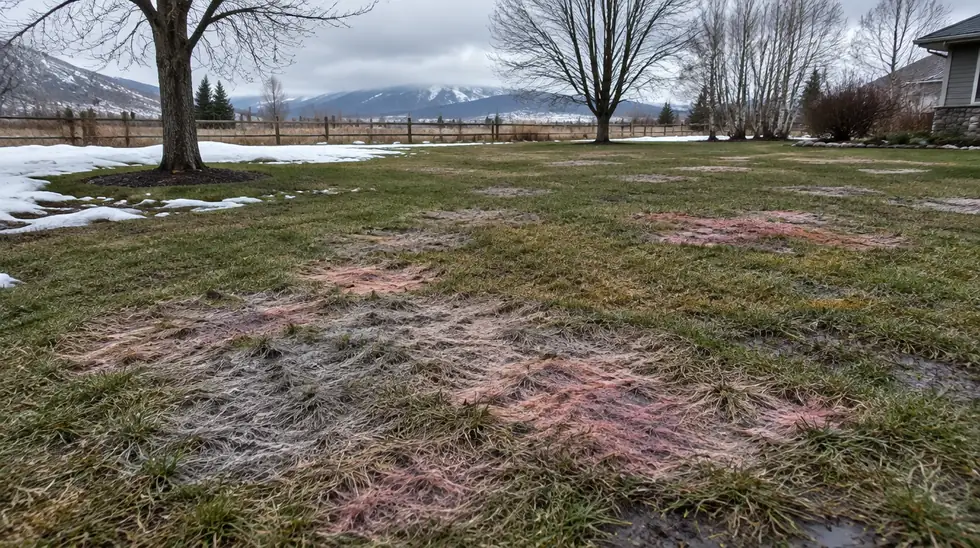
The snow pulls back in March and there it is: a matted, gray, crusted patch where the drift sat all winter. It looks dead. Something got in under that blanket and killed the grass, you decide, so you go hunting for the disease. You find pages confidently diagnosing brown patch and selling you a fungicide program.
Here is the part those pages leave out. In Montana, the patch you are staring at is almost certainly gray snow mold, it is genuinely common here, and it usually fixes itself. The disease the internet wants to sell you a cure for, brown patch, is real, but it is a minor problem in this state. And the thing that most often actually kills a Montana lawn is not a disease at all.
What you're looking at when the snow melts
The matted gray patches are gray snow mold, caused by Typhula species. MSU Extension names it as one of the common turf diseases in Montana, and spring is when you see it.
The mechanism is worth understanding, because it tells you how to prevent it. Gray snow mold is a cold-loving fungus that grows under snow cover, at temperatures hovering near freezing, on turf that stays wet and matted. The snowpack is not the enemy.
The snowpack is the growth chamber. Where snow sits deepest and longest, and where the grass beneath it was left long and un-frozen, the fungus gets weeks of dark, damp, near-freezing conditions to colonize, and when the snow finally melts you see what that colony did: patches of matted, grayish or whitish turf, sometimes with a faint crust, often in the exact shape of your plow piles and drifts.
There is a related species, pink snow mold, caused by Microdochium, that can show a pinkish tinge at the edges. It behaves similarly and is managed the same way. The two are sometimes lumped together as "snow molds," and for a home lawn the practical advice does not change.
The important thing to know: gray snow mold looks catastrophic and usually is not. Once the snow is gone and the soil dries and warms, the fungus stops, and the grass underneath often recovers on its own. It fades. If you do nothing but rake the matted patches apart so air reaches the soil, you have done the main thing.
What actually kills a Montana lawn
Now the reveal. You went looking for a disease, and the honest answer is that disease is rarely the killer here.
MSU Extension frames turf disease in Montana as "a minor problem", a phrase worth holding onto the next time a lawn-care program quotes you a fungicide schedule for a disease you cannot find. When MSU does name the common turf diseases in the state, it points to gray snow mold, melting-out and leaf spot, powdery mildew, and fairy ring. That is the real list. It is a short one, and none of it is the thing that takes a lawn out.
What actually kills a Montana lawn, most of the time, is one of these:
- Winter injury and desiccation. A dry, windy winter with the ground frozen hard means roots cannot replace the water the plant is losing, the same mechanism that browns your evergreens. It shows up as broad browning on exposed, south- and west-facing ground. This is the big one. Our guide to winter desiccation in Montana covers it in full.
- Watering that is wrong in one direction or the other. Daily light watering on heavy clay starves roots of oxygen and keeps them shallow; not watering at all in a dry July cooks the crown. Both look like "disease" to a homeowner and neither is. See what a Montana lawn is actually telling you when it goes yellow.
- Compaction, thatch, and poor drainage. Water that cannot soak in, or that sits in the same low corner every spring, kills turf slowly and then blames the weather.
- Insects and animals. Grasshoppers are a genuine and major Montana problem: about 70 species statewide, roughly two dozen of them pests, with outbreaks that track drought, and once the adults are in the lawn and garden, control is extremely difficult. Grubs, dog spots, and concentrated urine damage all leave dead patches that read as disease from ten feet away.
So when you are staring at a dead patch in April, the odds are overwhelming that the cause is winter, water, or soil, not a pathogen.
Brown patch is real — and it is not your Montana problem
This is where the internet has done Montana a disservice, so let's be precise. Brown patch is a real turf disease, caused by Rhizoctonia solani. It produces roughly circular patches of browning turf. It exists. But it is a warm, humid-weather disease: the conditions that drive it are high heat combined with high humidity and foliage that stays wet overnight, night after night. That is a Mid-Atlantic or Southeast summer. It is not a Montana valley summer, where the humidity is low, the nights cool off hard, and the growing season is short. MSU treats turf disease generally as a minor issue in Montana, and brown patch is not on its list of the common ones.
Brown patch is real but minor here. If a lawn-care company diagnoses your Montana lawn with brown patch and sells you a fungicide program to fight it, that is a strong signal to get a second opinion before you sign.
One more to strike from your worry list: verticillium wilt comes up on national turf-disease pages, but it is not a featured Montana turf problem. Do not let anyone sell you treatment for a disease that is not your priority.
The other diseases MSU does name
For completeness, the short list of turf problems that genuinely show up here, so you can recognize them:
- Melting-out and leaf spot. Spring diseases that appear in cool, wet weather as the lawn wakes up: small spots and thinning as the snow leaves. They fade as conditions dry. Cultural management, not chemicals, is the answer.
- Powdery mildew. Appears as a white, powdery coating on turf in shaded, poorly ventilated, damp spots: under a dense spruce, along a north wall. The fix is air and light, not a spray.
- Fairy ring. Rings of dark green grass, sometimes with mushrooms, sometimes with a ring of dead turf, where a fungus is breaking down organic matter in the soil. Usually cosmetic. Aerating and watering deeply helps; there is no easy chemical cure.
None of these require a fungicide program on a home lawn, and that points at the prevention rule that matters most.
Prevention is cultural, and it is all done in the fall
Gray snow mold is a conditions problem, so the fix is to remove the conditions. Every one of these actions happens before winter. By spring it is too late to prevent it.
- Do not over-fertilize in the fall. A late push of soft, lush growth goes into winter as a standing buffet for mold. Fall feeding has its place, but late-season nitrogen that forces tender growth is the wrong move.
- Keep mowing until the grass goes dormant. Long, matted, laid-over grass is the mold's habitat. A shorter, upright, clean stand going into winter gives the fungus much less to work with. Mow into dormancy, not up to the first snow.
- Do not pile snow on the turf. Where you pile snow, you get mold. Deeper and longer-lasting drifts mean longer mold-growing conditions. Anyone who has left a tarp over a pile of grass clippings through a Montana winter has seen what a wet mat becomes by March. This is the one prevention step that is entirely in your control each winter: aim the plow at the driveway edge and the shrub bed, not the middle of the lawn.
- Improve drainage. Turf that sits wet into the freeze, and again at melt, is the turf that molds. If the same corner floods every March, that is the spot to fix, and fixing it also helps the compaction and moss problems on the same ground.
And the treatment question, answered plainly by MSU Extension: fungicides are "not usually recommended for home lawn use." A fungicide program for snow mold on a residential lawn is money spent on a symptom. Fix the mowing, the snow piles, and the drainage and you have fixed the cause.
Fall is also when the diseases you will see next spring are decided, so the timing details matter. Fall and spring cleanup in Montana are two halves of the same calendar, and the ground here does not thaw until late April.
What to do in spring when you find it
When you walk the lawn at melt and find the gray patches, resist the urge to panic-treat. The steps are simple:
- Rake the matted patches to lift the laid-over grass and let air and light reach the soil. This is the single most effective thing you can do.
- Let the ground dry and warm. The fungus stops on its own as conditions change.
- Give it time before you decide it is dead. Snow mold rarely kills the crown outright. Most of it greens back within a few weeks.
- Overseed the bare spots in late summer, not spring. If a patch truly did not come back, more often from ice or desiccation than from mold, the best window to reseed in Montana is mid-August to mid-September, when the soil is warm and the weeds have backed off. Spring seeding in a short-season climate fights constant moisture needs and weed competition. Your town's frost dates will tell you how much season you have to work with.
If the whole lawn looks shot rather than patchy, the cause is almost certainly not disease. Re-read the section above on what actually kills a Montana lawn, and start with water and winter. And if the same thinned patches grow weeds every summer instead of grass, that is a different fight, one that comes with a legal deadline of its own. See the noxious weeds Montana law actually requires you to control.
Frequently asked questions
Is snow mold dangerous to my lawn?
Usually not. Gray snow mold is common in Montana and typically recovers on its own once the snow is gone and the ground dries. Rake the matted patches apart so air reaches the soil, and wait.
Does brown patch kill lawns in Montana?
Brown patch is real but minor here. It is a warm, humid-weather disease, and MSU does not list it among the common Montana turf problems. Treat a brown-patch diagnosis from a salesperson with skepticism.
Should I apply a fungicide for snow mold?
MSU Extension says fungicides are "not usually recommended for home lawn use." Prevention is cultural: no fall over-fertilizing, keep mowing until dormancy, don't pile snow on the turf, and improve drainage.
Why do I get snow mold in the same spot every year?
Because the conditions are in the same spot every year: a snow pile, a shaded corner, or ground that drains poorly and stays wet through freeze and thaw. Change the drainage and the snow placement, not the grass.
How do I reseed the dead patches?
Overseed in late summer. Mid-August to mid-September is the best window in Montana. Spring seeding is riskier here because the new grass needs constant moisture and competes with weeds.
The short version
The patch under the drift is almost never the emergency it looks like. Snow mold is common, cosmetic, and self-correcting. Brown patch is a real disease that is simply not a Montana priority. And the thing that genuinely ends lawns here, winter desiccation, bad watering, compacted and poorly drained soil, is solved by paying attention in the fall and by matching your management to the ground you actually have.
If your lawn's problem turns out to be the ground itself, clay that will not drain, a slope that will not hold, a stand that has never thrived no matter what you do, then the answer may not be more grass. It may be a planting that suits Montana instead. See how xeriscaping works in this climate, or find your Montana growing region to learn what your soil and season will actually support.


